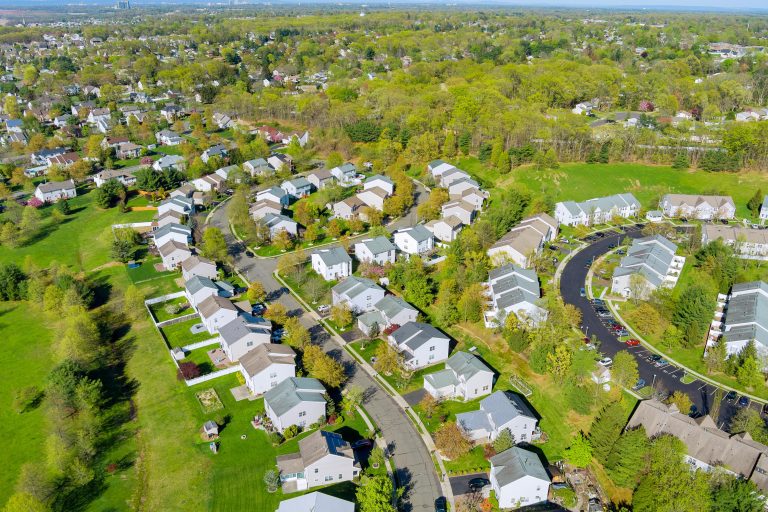





When Federal Vision Meets Local Reality
The housing affordability crisis has reached a breaking point. The average first-time homebuyer is now 40 years old, a stark reminder that bureaucratic delays aren’t just inconveniences; they’re barriers to the American Dream.
Two weeks ago, the U.S. Senate responded with historic legislation aimed at cutting red tape in construction. But while Congress debates solutions at 30,000 feet, the real bottleneck exists at ground level: local city permits that can take seven months to process.
Here’s the irony. Georgia has already built the infrastructure to solve this problem. The state government operates an official Office of Artificial Intelligence with comprehensive AI innovations guidelines. They’ve created procurement frameworks, innovation labs, and proven AI use cases for government efficiency.
So why are Georgia cities still drowning in permit backlogs when the state has already shown them how to fix it?
Georgia’s Blueprint for Government AI Success
A Real Digital Transformation Strategy
Georgia didn’t just talk about government digital transformation; they built it. In November 2025, the state published comprehensive AI procurement guidelines requiring “clear documentation, explainability, and audit trails for all government AI tools.
This isn’t a theoretical policy. It’s a working government digital transformation strategy that includes:
- Five Guiding Principles emphasizing “responsible systems,” “fairness and ethics,” and “human involvement.”
- A GenAI Sandbox through the Horizons Innovation Lab, where agencies safely test AI solutions
- Clear procurement processes designed to improve how “residents experience services.”
The state’s comprehensive approach to responsible AI adoption can be explored in detail at Georgia’s Office of Artificial Intelligence, which serves as a model for other states nationwide.
Approved AI Applications Already Match Permit Needs
The state’s guidelines specifically approve AI for drafting internal summaries, brainstorming, and formatting documents – exactly what happens during the building permit process. Georgia has essentially pre-approved the AI use cases that local governments need most.
The framework exists. The approval process is established. Local governments just need to use it.
Where Local Permits Break Down
The Seven-Month Problem
While state leaders embrace efficiency, Georgia permit processing remains stuck in the past. Processing times vary dramatically across Georgia counties, from as little as two days in efficient jurisdictions to as long as seven months in others, according to a Georgia Public Policy Foundation analysis of permitting delays.
This isn’t just frustrating; it’s economically destructive. The permit process breaks down at predictable points:
- Incomplete applications trigger automatic delays
- Plan-review teams struggle with the new 2026 building codes
- Manual processes miss issues that require expensive revisions later
- No centralized permit portal means inconsistent tracking and communication
The Real Cost of Inefficiency
Georgia law requires 45-day permit approval, but the clock resets every time staff request changes. Construction loans accumulate interest. Material costs rise. Housing prices increase.
These delays ripple through the entire housing market, contributing to the very affordability crisis that federal legislation aims to solve.
AI Plan Review: Following the State Playbook
Perfect Alignment with Existing Guidelines
The state’s AI framework directly addresses city permit challenges.
Here’s how AI plan review fits Georgia’s established responsible AI approach:
Problem-First Thinking: Instead of chasing technology, focus on the core issue: incomplete applications cause most delays. AI innovations can catch these problems at submission, not weeks into review.
Built-in accountability: The state requires “decision logs” and “audit trails.” Modern AI systems automatically generate detailed building permit records showing exactly how and why decisions were made.
Human-Centered Design: Georgia’s principle: “Use AI to support, not replace human judgment.” AI in government should flag issues for expert review, not make final approval decisions.
Beyond Building Permits: AI in Urban Planning
Expanding the Digital Transformation
AI in urban planning applications extends far beyond individual permits:
- Zoning compliance verification across multiple properties
- Infrastructure impact analysis for large developments
- Code consistency checks across similar projects
- Predictive analytics for department resource planning
These represent proven AI use cases that support comprehensive local government digital transformation, the same approach Georgia’s state government has already validated.
Implementation: A Three-Phase Roadmap
Phase 1: Foundation (Months 1-2)
Follow Georgia’s established process: request conditional approval from GTA before implementing AI tools. Choose vendors who understand the state’s responsible AI standards. Establish documentation protocols that save “prompts, outputs, and who reviews the content.
Phase 2: Pilot Programs (Months 3-6)
Start with permit sufficiency checks for residential projects. Implement a permits online portal with an AI-powered initial review. Measure concrete results: processing time, revision requests, and approval rates. Scale successful approaches across all building permit process types.
Phase 3: Full Integration (Months 7-12)
Expand AI plan review to commercial projects and the planning department. Integrate fully with existing permit portal systems. Train staff on optimized workflows that blend AI efficiency with human expertise.
The Opportunity Georgia Cities Can’t Ignore
Federal legislation recognizes the red tape crisis. Georgia’s state government has provided the AI framework, procurement guidelines, and innovation infrastructure. Local governments hold the final piece: transforming city permits from bureaucratic bottlenecks into efficient services.
The question isn’t whether AI in government will reshape public services, it’s whether Georgia cities will lead that transformation or watch from the sidelines.
For building departments, the opportunity is immediate and measurable. Reduce permit process times from months to days. Catch issues before they become expensive problems. Free up experienced staff for complex projects that truly require human expertise.
The tools exist. The guidelines are established. The federal push for housing affordability creates urgency.
Georgia cities can follow their state’s lead or explain to residents why permits still take seven months while neighboring counties process them in days.
The next step for Georgia cities is clear: leverage the state’s existing AI framework to transform permit processing from a bureaucratic bottleneck into an efficient public service.